Showing posts with label City Council. Show all posts

Tuesday, August 5, 2008

Let's Try This Again...

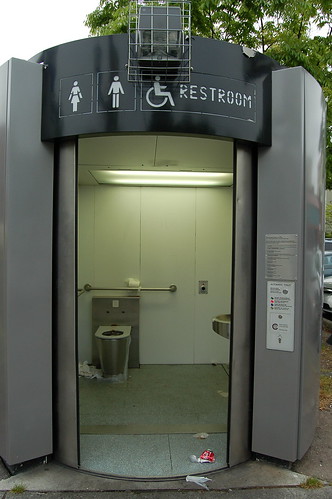
The City of Seattle has put its five automated public toilets up for auction again after the first round received no bids. The minimum bid has changed too — from $89,000 to a mere 99 cents with a $2.50 minimum increase.

The bidding could turn out to be a popularity contest, which toilet do people desire the most? Bidadoo Auctions has even uploaded dozens of high-resolution photos to entice the reluctant toilet fancier.

The standings are:


**CITY OF SEATTLE - APT #1 - PIKE PLACE MARKET**
This seller accepts PayPal
13 Bids
$205.38
Not specified
9d 1h 49m
**CITY OF SEATTLE - APT #3 - PIONEER SQUARE**
This seller accepts PayPal
7 Bids
$112.72
Not specified
9d 1h 46m
**CITY OF SEATTLE - APT #2 - ELLIOT BAY WATERFRONT**
This seller accepts PayPal
9 Bids
$105.83
Not specified
9d 1h 44m
**CITY OF SEATTLE - APT #4 - INTERNATIONAL DISTRICT**
This seller accepts PayPal
5 Bids
$102.50
Not specified
9d 1h 47m
**CITY OF SEATTLE - APT #5 - CAPITOL HILL**
This seller accepts PayPal
12 Bids
$100.00
Not specified
9d 1h 42m

Friday, August 1, 2008

Behind Deadline?

As far back as May 28, the Capitol Hill Chamber of Commerce was supposed to have submitted a report to the City Council's Cultural Overlay District Advisory Committee that would "inform [the committee's] process for establishing the City’s first Cultural Overlay District," according to the committee's Web site.

But neither the committee's Web site nor the Chamber's Web site has a copy. As of two weeks ago, Dennis Sellin of Lunde Consulting, the company hired to facilitate the committee, had never seen the report or heard its status.

Is it possible that the Chamber is still working on it? This Craigslist ad, posted July 30 suggests so:


Clickable

Tuesday, July 29, 2008

Green Behind City's Styrofoam Ban

It may appear that the City Council's bill to ban styrofoam and plastic utensils from food service businesses has an environmental basis, but a "fiscal note" linked at the bottom of the bill reveals other justifications.

It cites an annual cost of $620,ooo to the city for "collection, recycling, disposal and litter cleanup for the disposable food service items." The note also mentions that compostable containers would remove the need to sort food service garbage, which is expected to save the city money.

Not to mention the $250 fine for any establishment failing to comply.

However the City is also willing to fund the transition to the more expensive containers, which it estimates to be 5 to 1o cents more than Styrofoam ones, by helping to establish buying cooperatives.

Cedar Grove Composting appears to be the City's main destination for the food waste, and may help create "logos and/or color coding so the public cannot mistake such products for others that do not meet the established standard."

Monday, July 28, 2008

Styrofoam Containers to Go

From the City Council Action Summary, July 27:
Council Bill 116250 PASSED AS AMENDED 7 – 0

This bill bans the use of expanded polystyrene—Styrofoam—food containers in restaurants and grocery stores by January 1, 2009. Also under this law, in July of 2010, grocery-store foam trays for raw meat and seafood will be banned and replaced with compostable alternatives.

Council Bill 116251 PASSED AS AMENDED 6 – 1 (Drago Opposed)

This bill encourages Seattle residents to use reusable shopping bags by establishing a 20 cent green fee for disposable shopping bags at convenience, drug, and grocery stores, beginning on January 1, 2009.
Both bills come as part of the Zero Waste Strategy pushed by Councilmember Conlin and approved last July.

Sunday, July 27, 2008

Watching The Watchers

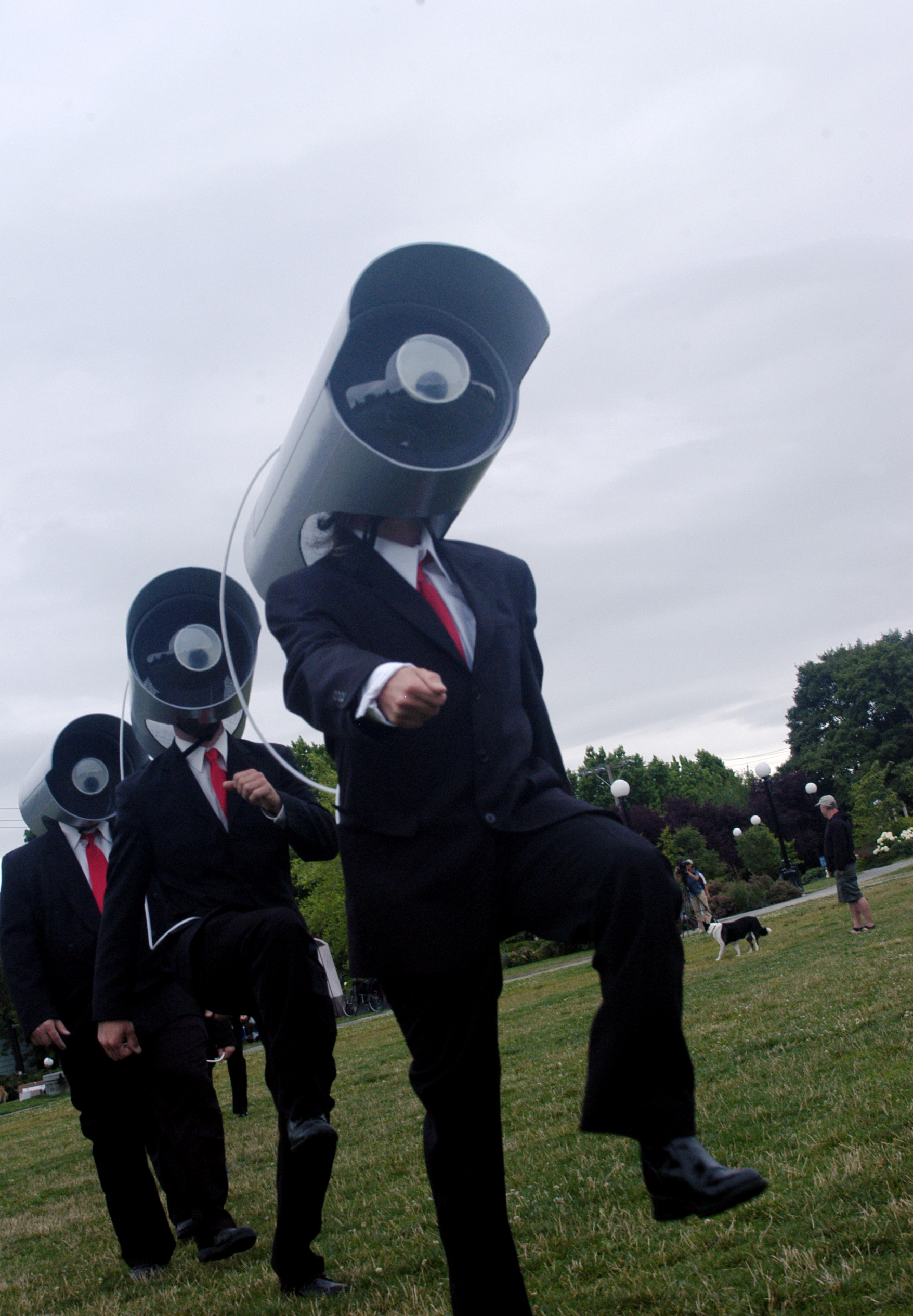
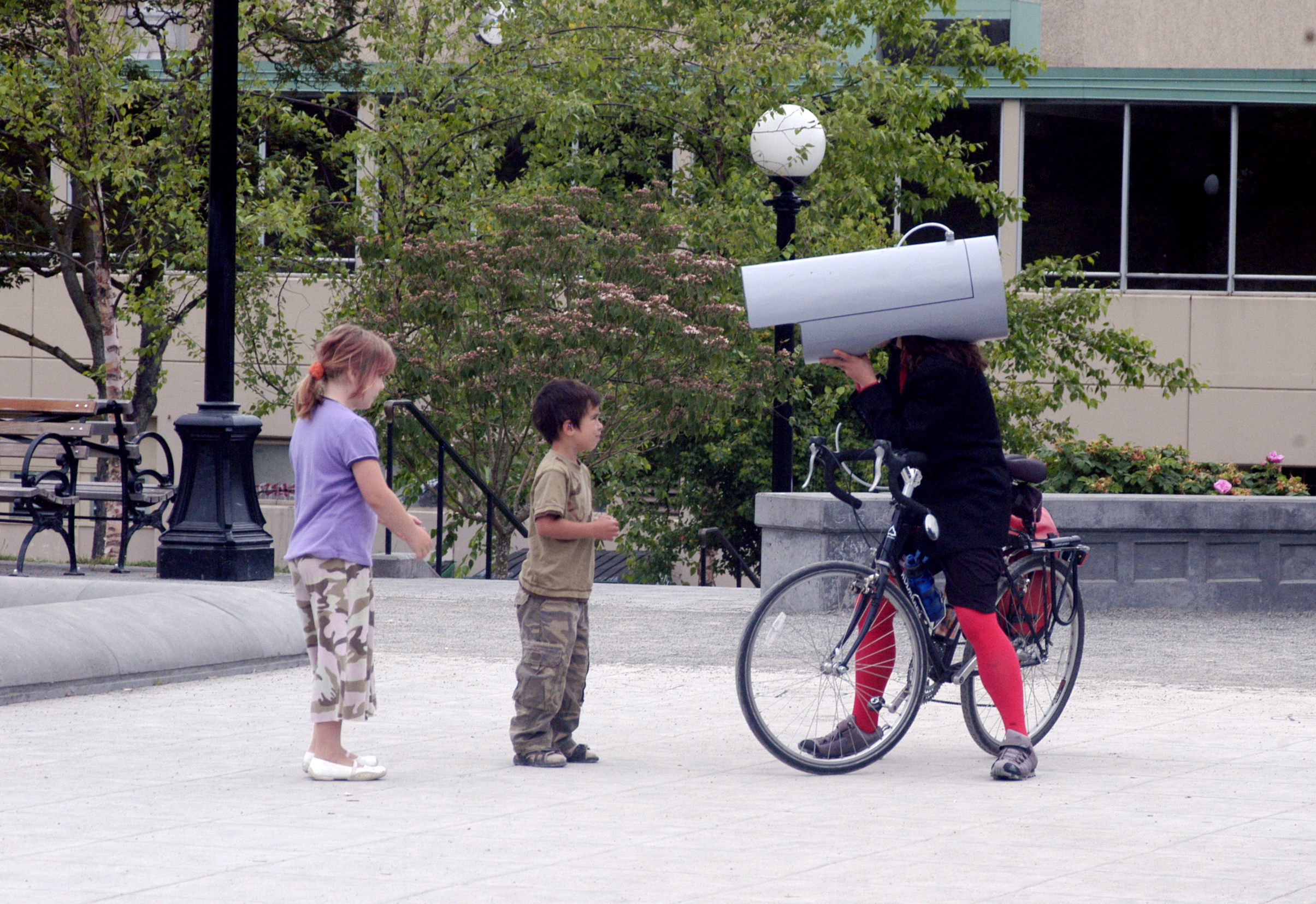
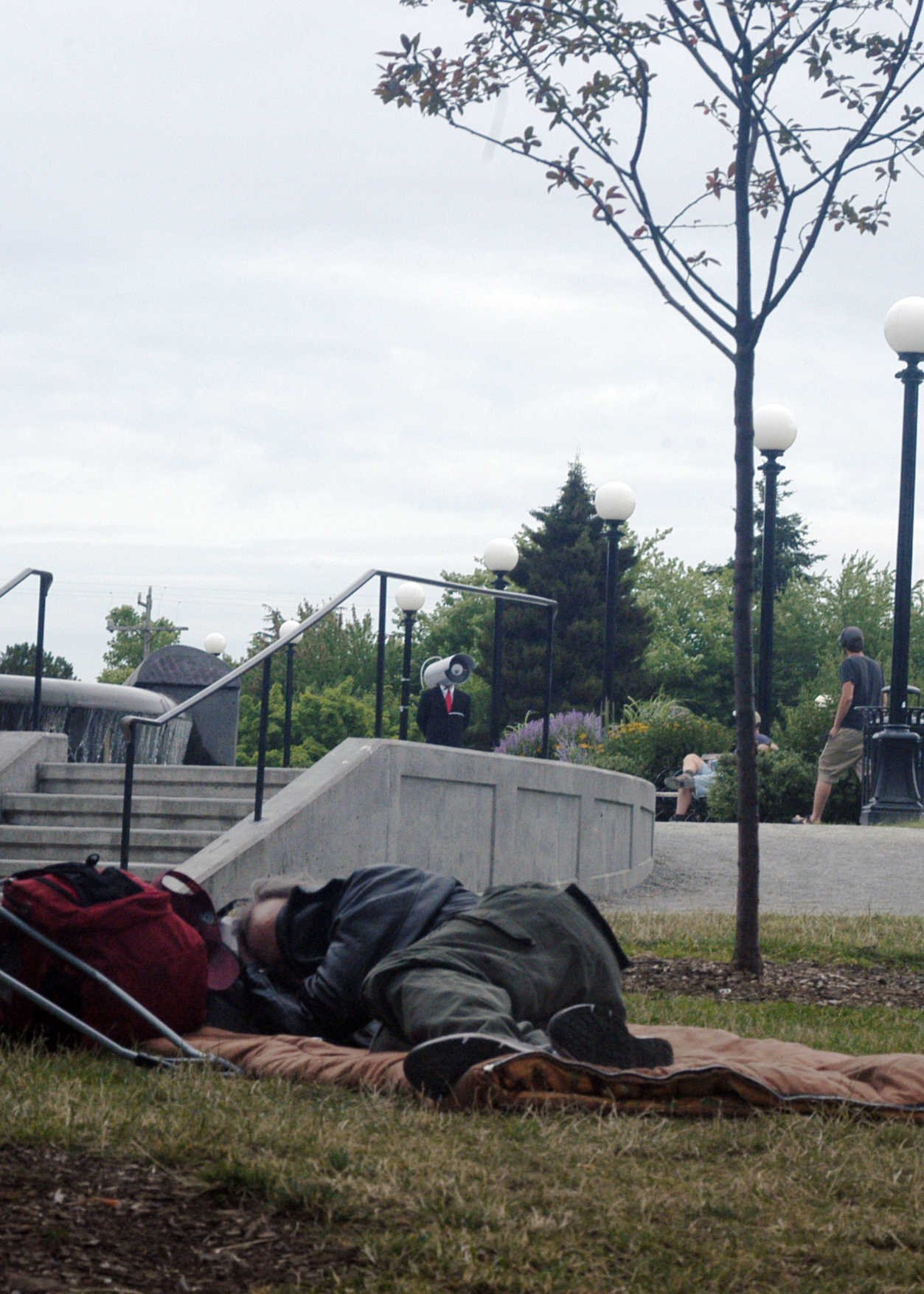
Cal Anderson Park got a little extra surveillance July 26 when several suited individuals with security cameras for heads wandered through the park as a part of the Camerahead Project.

The City of Seattle installed three security cameras in the Capitol Hill park in January despite a City Council budget proviso requiring definition of protocol for usage of the cameras, a move that surprised and upset some, including artist Paul Strong Jr.

Strong, who usually does sculpture, had just read
Little Brother by Corey Doctorow, and inspired by Pablo Defendini's poster for the book depicting a suited man with a camera for a head, created the project to bring the issue to life, literally.

Working from the first model he wore to Doctorow's book reading in Seattle, Strong constructed about a dozen more Cameraheads — his name for the suited security-camera lookalikes —
with either a digital camera mounted to take pictures in a parody of the security cameras, or a face-obscuring hemisphere of shiny plastic, to complete the camera look.

Strong also solicited volunteers and bought outfits at Value Village so that friends and volunteers could wander the park and bring the issue face-to-face with park users.

"It's still something watching you," said teenage Camerahead volunteer Marissa Horan, explaining why she got involved in the project. "I makes you feel like you're doing something wrong." She volunteered with 11-year-old Aidan, whom she babysits.

He echoed her concerns, "It feels like... turning 18 during the war. You don't feel very safe."


Most at the park seemed amused by the costumes, some even taking pictures and joking with the Cameraheads.

But one man, when approached by a Camerahead, shouted, "Why don't you take that shit to Olympia? You're just getting the negative reaction you expected."

Under an ordinance passed June 9, police can access footage, watch live taping, or direct the cameras in the case of a reasonable suspicion of a crime, an ongoing investigation, or in a State of Emergency.

But meeting minutes from a February 28 Parks meeting indicate that the department expected a different use for the cameras, writing "the use of camera surveillance and park rangers is to increase the public’s perception of safety in Seattle’s downtown parks."

ACLU Communications Director, Douglas Honig, who passed out fliers at the event, says that the cameras are not an issue of legality but that the group is worried about growing security camera presence in public places.

The City installed cameras in the park around the same time as increasing police presence and creating the new position of Park Ranger, seven uniformed Parks employees who patrol several center-city parks. The rangers can issue Parks Exclusions for any activity prohibited by Parks or Seattle Municipal codes, which includes alcohol consumption without a permit and sleeping overnight with "sleeping equipment."

The park already had two cameras installed to monitor the reservoir before it was covered, as recommended by the Environmental Protection Agency.

Strong plans to take his project to the Burning Man arts festival in Black Rock, Nevada
in August.

For Further Information:

Tuesday, July 22, 2008

City Council Advisory Committee Takes First Steps Towards Cultural Overlay Districts

A newly formed advisory committee to the City Council held its first meeting yesterday to discuss how Seattle might preserve affordable arts space through a type of neighborhood planning called the Cultural Overlay District.

Already used in other US cities, the district is designed to preserve low-cost art space through cooperation with developers, like special zoning allowances and expediting permit approval.

The advisory committee is made up of developers, residents, business owners, and arts administrators, including Hallie Kuperman, owner of Century Ballroom located in the Oddfellows Hall, and Richard Muhlebach of Kennedy Wilson Development.

“I was pleasantly surprised at the level of discourse and the willingness to cooperate between the committee members,” says Dennis Sellin, Senior Associate at Lund Consulting, the firm facilitating the meetings for the City Council.

“I haven’t seen arts organizers, property developers and owners in the same room and talking the same language before, and I think that is extremely necessary to bring a good recommendation out of this process.”

Rapid development of Capitol Hill and the subsequent flight of arts organizations spurred the local arts community to advocate for creation of the districts in Seattle, which led to the creation of the committee. Arts administrators and fans packed the City Council's April 2 Culture, Civil Rights, Health and Personnel Committee meeting after news that the new owner of the Odd Fellows Hall on East Pine Street and 10th Avenue had raised rents about 200 percent.

But it is not just Capitol Hill residents — representatives from West Seattle and the International and Central districts are also serving on the committee. The committee is expected to focus on Capitol Hill to create a model for other neighborhoods.

The Seattle Department of Planning and Development and Office of Arts and Cultural Affairs may advise the committee, and a subcommittee of the Capitol Hill Chamber of Commerce Arts and Entertainment Committee, co-chaired by CODAC member Matthew Kwatinetz, will submit a report also.

The City Council will hear the committee's recommendations at a joint meeting of its Planning, Land Use, and Neighborhoods and Culture, Civil Rights, Health, and Personnel in September, before the City Budget is finalized, and will then present them to Mayor Nickels.

For Further Reference:

Tuesday, July 15, 2008

The Mid-Week News

Brace yourselves, we have lift-off:

The day has come at last for the City of Seattle to jettison it's odd space-toilets. A mere four months after Seattle Public Utilities recommended their removal, citing uncleanliness and criminality, and only two months after the City Council ordered their contract to be suspended, the five toilets will find new homes.

Bidadoo auction service will auction the toilets separately on Ebay starting at $89,000 each. SPU officers expect the auctions to begin sometime this afternoon and to stay open for 10 days. All five toilets — located on Broadway, near Pike Place Market, and in Hing Hay, Occidental, and Waterfront parks, respectively — will be fenced off starting August 1, and the toilet's new owners will remove them sometime later that month.

An advance copy of Bidadoo's ad describes the toilets as "very good physical and cosmetic condition overall," and weighing about 13,250 pounds each. Anyone who wins a toilet must also secure the correct permits to remove the unit within three weeks of their winning bid.

The Council overruled a mayoral veto to commission the toilets in 2001, predicting them to cost less than $600,000 annually. But the Seattle Public Utilities report calling for their removal predicted a savings of $4.5 million in five years, significantly more.

The German firm that designed the toilets, Hering International, still has a picture of the Pike Place Market toilet displayed on their Automated Public Toilet Web page.


Where there's smoke, there's fire:

If you thought you heard 10 firetrucks worth of screaming sirens last Thursday morning, you may not be far off. The Rabbit Hole, the notoriously grungy hookah bar at Northeast 47th Street and Roosevelt Way Northeast in the University District, caught fire sometime between the night of July 09 and the morning of July 10.

From 7:39 to 7:46a.m, the fire department dispatched six fire engines, four command vehicles, two ladder trucks, two medical aid vehicles, one air truck, and one Deputy 1 Chief, qualifying it as a full response.

All but four vehicles — the air truck, one engine, one command vehicle, and one medic — left the scene by 8a.m, and the last was gone by 9:15a.m.

Fire department records show that an engine responded to a police request for assistance there on the afternoon of July 13, staying for roughly 20 minutes.

Smoke-blackened windows and ripped caution tape mark the scene of the fire. One of the large windows on the south side of the building is covered in plastic sheeting, an apparent make-shift cover after the fire department broke the window in. A peek inside reveals a charred corner of the large room, strewn with bits and pieces of burnt couches.

The hookah bar ran into trouble in 2006 when its owners continued to operate despite the recent smoking ban, and the business changed hands to new owners at the end of 2007 who changed the name on the business license to "Night Owl Lounge." Posts on local hookah-bar Web sites indicate that the business has not been open since sometime in 2007.

Its appearance has remained relatively unchanged since closing months ago — even the beaten-down old couches are the same. But one thing has changed. The large window to the left of the entrance, which was a psychedelic mushroom mural, is now painted with a bird's eye view of a U-District intersection.